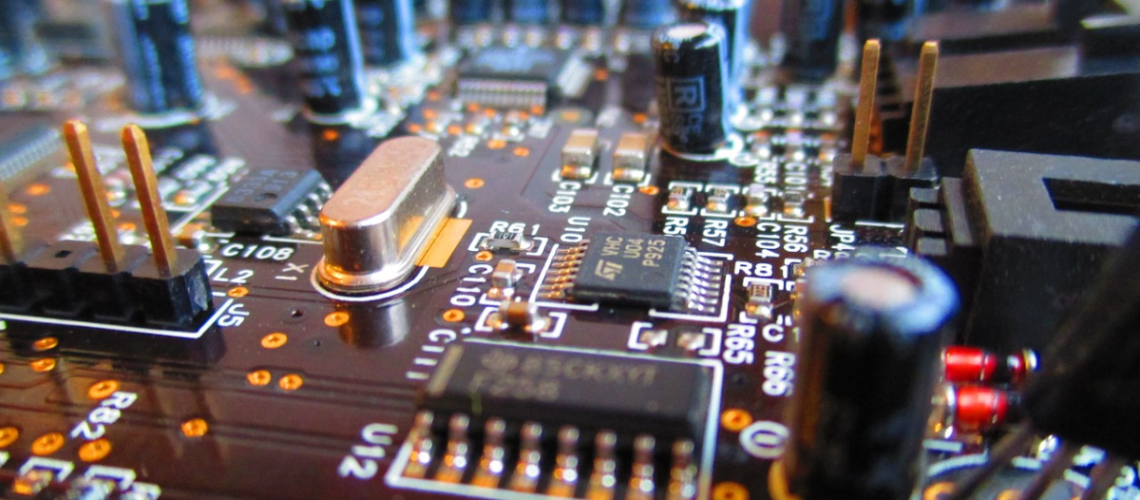
Circuit board assembly is a complex process involving the placement of electronic components onto a printed circuit board (PCB). PCBs serve as the backbone of most electronic devices, providing a platform for connecting and interconnecting various components.
The PCB is cleaned to remove any contaminants that might interfere with the assembly process. A stencil is placed over the PCB, and solder paste is applied through the stencil openings using a squeegee.
This creates precise solder deposits for component placement.
The components are placed either automatically or manually.
For larger components, manual placement using tweezers or specialized tools is often employed. For smaller components and high-volume production, automated placement machines are used. These machines can accurately place thousands of components per hour.
After the components are placed, they undergo a soldering process. One type of process is reflow soldering: a PCB is passed through a reflow oven, where the solder paste is melted, and the components are soldered to the PCB. Another process soldering is wave soldering, for through-hole components, wave soldering is used, where the CB is passed through a wave of molten solder.
Manual soldering is also done when a through-hole component cannot be wave soldered
Next, the PCB undergoes inspection. Automated optical inspection (Al), using cameras and image processing algorithms, is used to detect defects such as missing components. incorrect placement. or solder bridges. in-circuit testing (ICT) performs electrical tests to verify the circuit board’s Tunctionality and identity any short circuits or open circuits. A conformal coating may be optionally added. it is a protective coating applied to the CB to shield it from moisture, dust, and other environmental factors
Finally, the assembled PCB is integrated into the final product, such as a smartphone, computer. or appliance. Rigorous testing is conducted to ensure the product meets performance and reliability